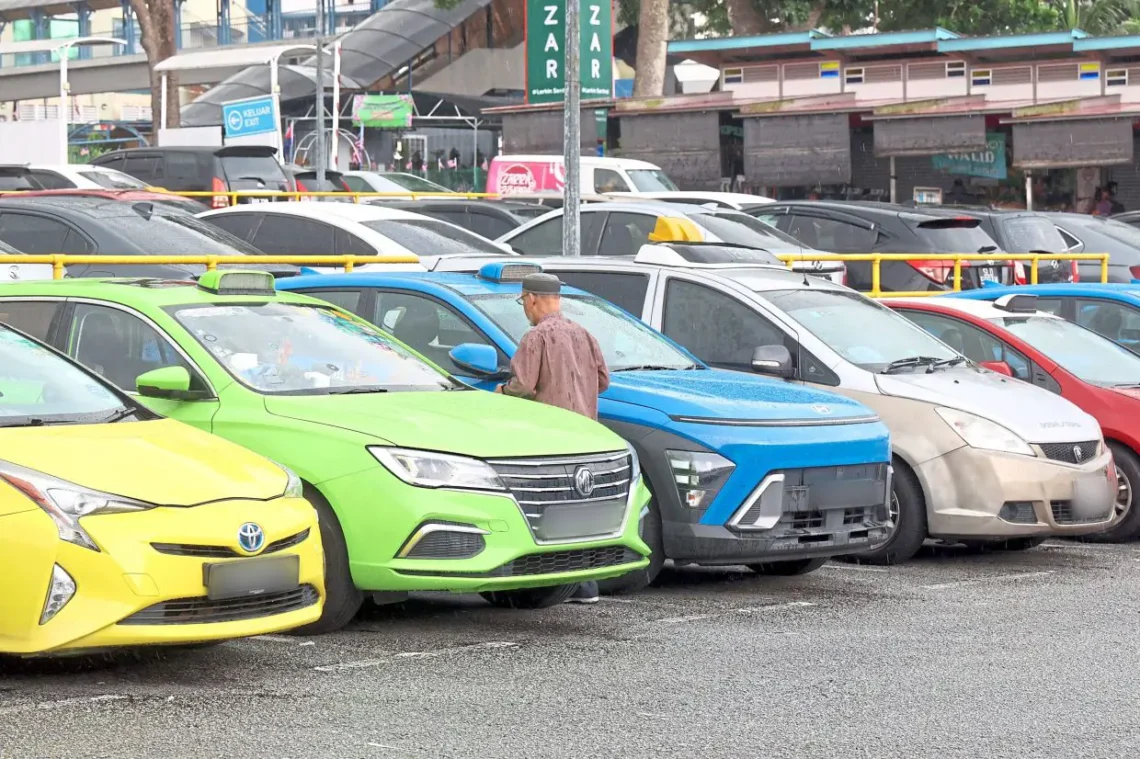
If you spend any amount of time in Johor Bahru, whether as a resident, a frequent visitor or someone crossing the Causeway for the first time, you will eventually face the same question: should you take a Grab or hail a taxi?
For many people today, the answer feels almost automatic. Open the Grab app, enter your destination and wait for a driver. Yet traditional taxis continue to operate throughout Johor Bahru, particularly around JB Sentral, City Square, Larkin Sentral, major shopping malls, hotels and transport hubs. Depending on when and where you are travelling, either option can make sense.
The assumption that Grab is always cheaper is not entirely accurate, but it is close. In most situations, Grab offers better value, more transparent pricing and greater convenience. At the same time, there are moments when taxis become surprisingly competitive, particularly during periods of surge pricing or when immediate availability matters more than saving a few ringgit.
Understanding the differences can help you make better decisions, especially if you visit Johor Bahru regularly.
The Short Answer: Is Grab Usually Cheaper?
For the vast majority of journeys within Johor Bahru, Grab is usually cheaper than taking a taxi.
This is particularly true for popular routes such as JB Sentral to Mid Valley Southkey, Mount Austin, Paradigm Mall, Bukit Indah, Legoland, Eco Botanic and Senai Airport. The fare is displayed before the ride begins, passengers can compare options instantly, and competition between drivers helps keep prices relatively affordable.
This pricing transparency has been one of the main reasons Grab became so dominant throughout Malaysia. Rather than negotiating with a driver or wondering whether a particular route will cost more than expected, passengers know exactly what they are paying before confirming the booking.
That certainty matters more than many people realise. Even when the difference between a Grab and a taxi fare is relatively small, most travellers prefer knowing the cost upfront rather than guessing.
How Transport in Johor Bahru Has Changed
Visitors who have been travelling to Johor Bahru for a decade or more will remember a very different transport landscape.
Before ride-hailing became mainstream, taxis were often the default option for travellers arriving through the checkpoint. Outside JB Sentral, rows of taxis waited for passengers heading to shopping malls, hotels and residential areas across the city. Some drivers used meters while others preferred fixed fares. For locals, navigating this system was relatively straightforward. For visitors, especially those unfamiliar with local rates, it could be difficult to know whether a quoted fare represented good value.
The arrival of Grab changed passenger expectations almost overnight. Suddenly, travellers could compare prices before entering a vehicle. Driver information, estimated arrival times and fare details became available instantly through a smartphone.
What began as a cheaper alternative gradually evolved into the preferred option for many residents and visitors alike.
Why Grab Is Usually the Better Value Option
The biggest reason Grab is often cheaper comes down to pricing structure.
Traditional taxis operate within a regulated framework, but operating costs, availability and route factors can still influence fares. Grab, meanwhile, benefits from a large network of drivers competing for passengers across the city. This creates a marketplace where prices generally remain competitive during normal conditions.
For everyday trips around Johor Bahru, the savings can be noticeable. Short journeys between shopping malls, residential areas and dining districts often cost surprisingly little compared to what visitors from Singapore might expect. Even longer rides remain relatively affordable by regional standards.
Another advantage is that Grab allows passengers to compare different vehicle categories. Someone travelling alone may choose the cheapest available option, while larger groups can book six-seater vehicles and split the cost among several passengers. When divided between family members or friends, the cost per person often becomes negligible.
Many visitors find themselves taking more rides simply because the fares are so reasonable.
When Taxis Can Actually Be Cheaper
Although Grab is usually the cheaper option, there are situations where taxis become more competitive.
The most obvious example is surge pricing. During periods of exceptionally high demand, Grab’s dynamic pricing system can increase fares substantially. Public holidays, festive seasons, school holidays, major events and heavy rain can all trigger higher prices.
Anyone who has attempted to leave a busy shopping mall on a Saturday evening during a long weekend has probably seen this happen. A journey that normally costs RM15 may suddenly appear as RM35 or RM40.
When fares reach those levels, taxis sometimes become surprisingly attractive. If a taxi is already waiting nearby and the quoted fare is reasonable, the price difference may be minimal. In certain cases, the taxi may even work out cheaper.
The challenge, of course, is determining whether the quoted fare is actually reasonable. This is where Grab remains useful even if you do not intend to book it. Checking the app gives you a useful benchmark before agreeing to any alternative transport arrangement.
The Hidden Cost That Most People Ignore
One mistake many travellers make is focusing exclusively on fare prices.
Transport decisions are not purely financial. Time has value too.
Imagine leaving Mid Valley Southkey on a rainy evening. A taxi is available immediately outside the entrance, while Grab estimates a fifteen-minute wait because of heavy demand. If the taxi costs only a few ringgit more, many people would gladly pay the difference rather than stand outside waiting.
The same principle applies when travelling with elderly relatives, young children or large amounts of shopping. Saving RM5 sounds sensible in theory, but the practical realities of the situation often matter more.
Experienced visitors tend to look at both price and convenience before deciding.
Grab vs Taxis for Airport Transfers
Airport transfers provide one of the clearest comparisons between the two options.
Senai International Airport is located outside central Johor Bahru, making transport costs more noticeable than short city journeys. For most travellers, Grab remains the preferred choice because pricing is transparent and easy to compare. You know the fare before leaving the airport or before departing for your flight.
Many hotels also recommend Grab to guests because it reduces uncertainty and allows visitors to avoid potential misunderstandings regarding fares.
Families often find Grab particularly useful for airport transfers because larger vehicles can accommodate both passengers and luggage without requiring multiple cars. Once the fare is split among several travellers, the overall value becomes difficult to beat.
Why Singaporeans Almost Always Use Grab
There is a reason why Grab has become the default transport choice for many Singaporeans visiting Johor Bahru.
Part of it is simply familiarity. The booking process feels familiar, payment options are straightforward and the app functions in a similar way on both sides of the border. Travellers do not need to learn a new system or worry about language barriers when entering destinations.
There is also the matter of confidence. Most visitors do not know the typical taxi fare between every pair of destinations in Johor Bahru. Grab removes that uncertainty by providing an instant reference point.
Even if a visitor ultimately chooses a taxi, having a visible fare estimate makes it much easier to judge whether an alternative price is reasonable.
For occasional visitors, that reassurance is often worth more than a small difference in price.
Safety, Accountability and Peace of Mind
Cost is not the only factor influencing transport choices.
Many passengers appreciate the accountability built into ride-hailing platforms. Driver details are visible before pickup, routes are recorded digitally and both drivers and passengers can leave ratings after the trip.
This does not mean traditional taxis are unsafe. The overwhelming majority of taxi drivers in Johor Bahru are professional and reliable.
However, many travellers feel more comfortable knowing that their journey information is stored within an app and that customer support channels exist if something goes wrong. For solo travellers, women travelling alone and first-time visitors, this additional layer of transparency can be reassuring.
Areas Where Grab Works Best
One of Grab’s strengths is the breadth of its coverage throughout Johor Bahru.
Popular destinations such as City Square, Mid Valley Southkey, KSL City Mall, Paradigm Mall, Mount Austin, Taman Pelangi, Bukit Indah, Eco Botanic and Legoland typically have strong driver availability. In these areas, waiting times are often relatively short, particularly during daytime hours.
The further you move away from major urban centres, the more variable availability can become. This is rarely an issue for tourists following typical shopping and dining itineraries, but it can occasionally affect travellers heading to more remote parts of Johor.
For the vast majority of visitors, however, Grab coverage is more than adequate.
Situations Where Taking a Taxi Still Makes Sense
Despite Grab’s popularity, taxis continue to serve an important role.
They are particularly useful when your phone battery is low, mobile data is unavailable or immediate transport is needed. A taxi waiting outside a mall or hotel can sometimes be the fastest solution, especially when demand for ride-hailing services is unusually high.
Some travellers also prefer taxis because they are accustomed to using them and appreciate the simplicity of getting into a vehicle without opening an app.
Rather than viewing the two options as competitors, it is often more useful to see them as complementary transport choices. The smartest travellers simply compare both options and choose whichever works best at that moment.
Common Mistakes Visitors Make
One of the most common mistakes is accepting a taxi fare without first checking Grab prices. Even if you ultimately choose the taxi, knowing the approximate Grab fare provides valuable context.
Another mistake is focusing entirely on the lowest possible price while ignoring practical considerations. A slightly cheaper ride is not always the better option if it involves a long wait, complicated pickup arrangements or unnecessary inconvenience.
Many first-time visitors also underestimate how busy pickup zones can become around major malls and transport hubs. Learning where designated Grab pickup points are located can save considerable time and frustration.
Final Verdict: Should You Use Grab or Taxis in JB?
For most journeys within Johor Bahru, Grab remains the better choice. It is usually cheaper, more transparent and easier to use, particularly for visitors who are unfamiliar with local transport costs. The ability to see fares before booking eliminates much of the uncertainty that travellers previously faced when relying on traditional taxis.
That does not mean taxis are obsolete. There are moments when they become the more practical option, particularly during periods of high demand, heavy rain or when immediate transportation is needed. In those situations, paying slightly more may be worthwhile if it saves significant time.
Ultimately, the question is not whether Grab or taxis are universally better. It is about understanding when each option makes sense. For most travellers exploring Johor Bahru today, Grab will probably remain the default choice. It combines affordability, convenience and predictability in a way that aligns perfectly with how modern travellers prefer to move around a city.
The next time you find yourself standing outside JB Sentral, City Square or Mid Valley Southkey wondering which option to choose, the simplest approach is often the best one. Open the Grab app, check the fare, look around to see what taxis are available, and compare. More often than not, Grab will come out ahead. When it doesn’t, at least you’ll know exactly why.